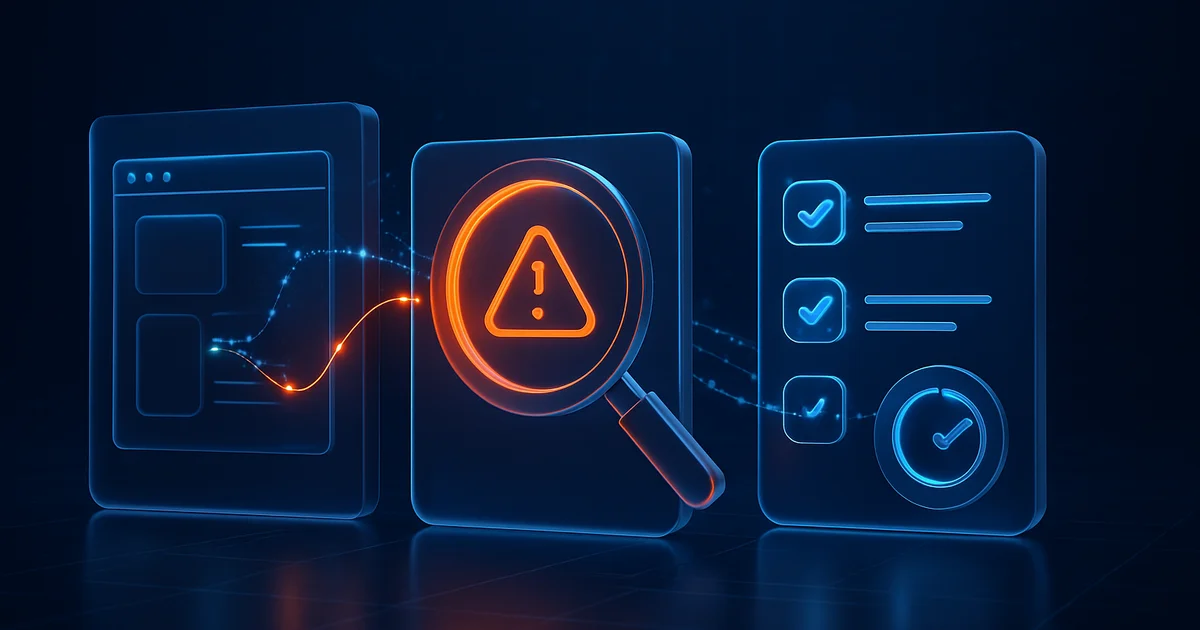
Security is not a milestone you reach once. Websites change constantly: new blog posts, plugin updates, A/B test scripts, and third-party widgets all alter your attack surface. A scan that passed last quarter says nothing about what shipped yesterday.
Continuous vulnerability monitoring means running repeatable tests on a schedule and comparing results over time. When a new critical finding appears, you know exactly which deployment introduced it. That speed matters because attackers do not wait for your next annual audit.
The Problem With Point-in-Time Scans
One-off scans are useful for baselines, but they create a false sense of stability. Teams often scan before launch, fix blockers, and then disable testing until the next big release. In between, marketing adds a form builder, engineering enables a debug route, or a contractor uploads an old backup to a public folder.
Each change is small, but cumulative drift is how common website security mistakes return. Continuous monitoring turns "we should scan again someday" into an automated habit.
What to Monitor Continuously
Prioritize externally reachable assets: production domains, customer login flows, checkout paths, and public APIs. Run the website vulnerability scanner after every production deploy at minimum, and weekly on stable sites.
Also track transport and policy layers on the same cadence. Certificate expiry and cipher downgrades show up in the SSL certificate checker. Header regressions appear in the security headers analyzer. Email authentication drift surfaces in the email security checker.
Integrating Monitoring Into Your Lifecycle
Continuous monitoring works best when it mirrors your vulnerability management lifecycle: discover, prioritize, fix, verify, and record. Store scan exports in your ticket system so each finding has an owner and a retest date.
Alert on severity, not noise. A new medium finding on a staging site can wait; a high finding on production payment pages cannot. Vulnify's dashboard gives you history so you can prove issues were opened, resolved, and closed with evidence.
Who Benefits Most
High-change environments gain the most: e-commerce, membership communities, and multi-tenant SaaS. Small businesses with WordPress or Shopify stacks see frequent plugin updates that deserve a quick rescan.
Compliance-driven teams also rely on ongoing evidence. Regulators and enterprise customers increasingly ask how you monitor controls between audits, not just whether you passed one test. Compliance-oriented scanning provides that narrative.
Getting Started
Begin with a full baseline scan from the dashboard, document owners for each finding, then schedule recurring scans at a cadence your team can act on. Pair automation with scanning best practices so results lead to fixes, not PDFs in a folder.
Attackers scan continuously. Your defenses should too. Add the origin to Website Watch for a daily pulse and a weekly Standard ($29) or Deep ($49) scan that does not use credits. Use Scheduled Scans when you need a custom credit calendar or Comprehensive coverage.